Who Gets Counted? The Constitutional Stakes of the 2030 Census
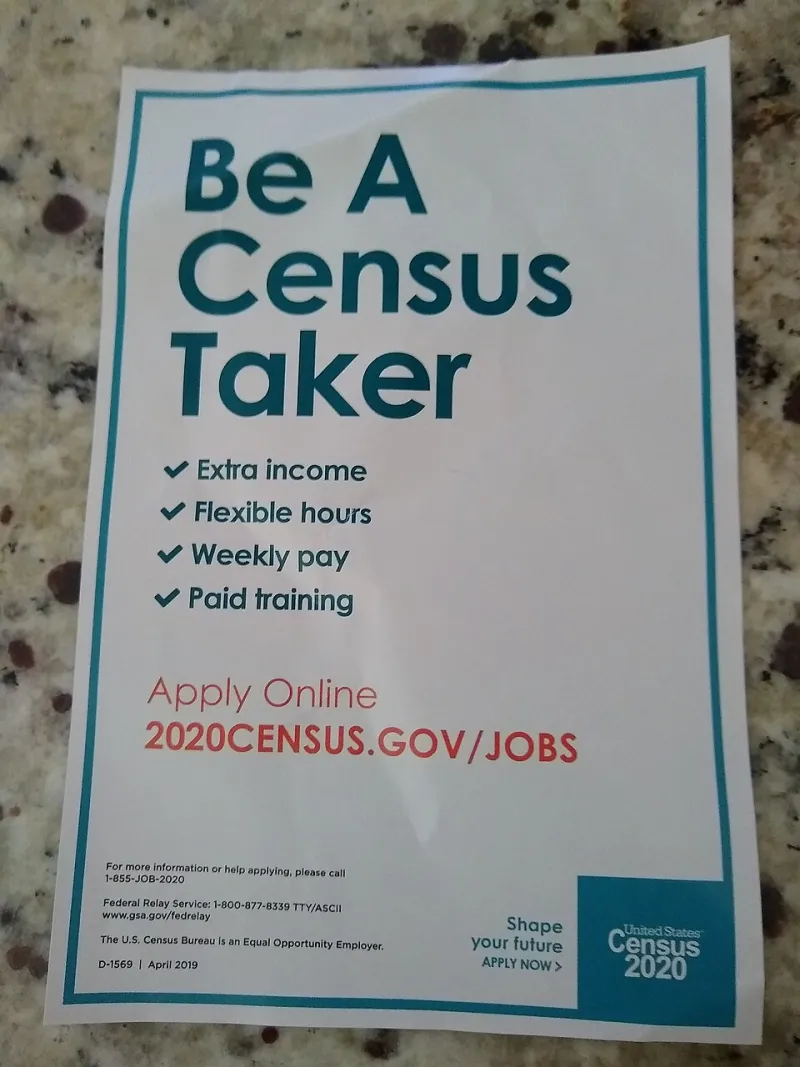
Photo: Whoisjohngalt, CC BY-SA 4.0, via Wikimedia Commons
Every ten years, the Constitution requires the federal government to do something that sounds administrative but is profoundly political: count the people. Article I, Section 2, Clause 3—the Census Clause—is the textual root of that obligation. It is also the reason the 2030 census, still four years away, is already the subject of legal planning, congressional oversight, and speculation about litigation. As of late 2026, the fight over the next count is less about arithmetic than about constitutional meaning.
A Clause That Says Just Enough
The Census Clause directs that an 'actual Enumeration' be made within three years of the first meeting of Congress and 'within every subsequent Term of ten Years, in such Manner as they shall by Law direct.' It then links that count to representation and direct taxation. The original text counted enslaved persons as three-fifths of a person, a compromise later repudiated by the Fourteenth Amendment, which replaced the clause's population formula and added a penalty for denying the vote. What remains is a spare instruction: count everyone, every decade, and let Congress choose the method.
That sparseness is the source of both the census's durability and its recurring controversies. The Constitution does not say what questions may be asked, how households must be contacted, or what statistical techniques may be used. It does not mention privacy, sampling, or citizenship. Those silences are not omissions so much as delegations. Congress has filled them through the Census Act and through oversight of the Commerce Department, which houses the Census Bureau. The constitutional question, when it arises, is whether Congress and the executive have stayed within the boundaries of the 'manner' they were given.
The Manner Is the Message
Because the clause hands method to Congress, census disputes often look like administrative-law cases rather than constitutional ones. That is not an accident. In Department of Commerce v. New York (2019), the Supreme Court considered the Trump administration's effort to add a citizenship question to the 2020 census. The Court held that the Commerce Secretary had broad authority to decide what to ask, but it also found that the stated rationale—enforcement of the Voting Rights Act—was pretextual. The question never appeared on the form. The episode illustrated a recurring pattern: the Constitution may permit a census practice, while statutes and administrative procedure still constrain it.
As the 2030 count approaches, similar proposals may return. A citizenship question, a change in how noncitizens are treated for apportionment, or a new deadline for delivering population totals would each raise the same structural issue. Article I gives Congress the power to direct the manner of enumeration; it does not give the executive an unlimited pen. When the political branches disagree about what the census is for, courts are asked to decide whether the method chosen is faithful to the statute—and, more rarely, to the Constitution.
Sampling, Privacy, and 'Actual Enumeration'
The phrase 'actual Enumeration' has been mined for meaning in disputes over statistical methods. In Commerce v. House (1999), the Supreme Court held that the Census Act barred the use of statistical sampling for apportionment, avoiding the constitutional question. In Utah v. Evans (2002), the Court allowed a form of imputation used to fill gaps in the count, reasoning that the Constitution does not forbid every statistical adjustment. The tension is real: a census that misses people is not accurate, but a census that estimates them is not a literal headcount. The text does not resolve the dilemma, and the Court has generally left the choice to Congress.
Privacy has followed a similar path. Census confidentiality is protected by statute, not by an explicit constitutional right. Yet the Fourth Amendment and broader notions of informational privacy shadow the debate. The 2020 census used differential privacy—a technique that adds statistical noise to protect individual responses—and the 2030 count will likely refine it. The question is not whether privacy matters, but how much accuracy the government may trade for it. That is a policy judgment with constitutional overtones, because a distrustful public is a hard-to-count public.
The 2030 Battlegrounds
As of 2026, the Census Bureau is already testing address canvassing, outreach strategies, and data-processing systems for 2030. Congress controls the appropriations that make those preparations possible, and the 2026 midterms will shape the oversight agenda. State and local governments are forming complete count committees, aware that an undercount can cost a House seat, an Electoral College vote, or a share of federal funds. Advocacy groups are pressing on prison gerrymandering, rural access, language barriers, and the treatment of transient populations.
Each of these is a practical fight, but each rests on a constitutional premise: that representation should follow population, and that population should be counted in a way the law can defend. The census is not a neutral snapshot. It is a legal construction, built by statutes, regulations, and litigation. The count before the count is the work of making that construction legitimate.
Why the Census Clause Still Matters
The 2030 census will not be the first to be contested, and it will not be the last. What makes it constitutionally significant is the same thing that made the first census significant: Article I ties political power to enumerated people. When the method of enumeration is disputed, the distribution of power is disputed too. Courts may resolve individual cases, but they cannot remove the underlying political choice. That choice belongs to Congress, within the boundaries of Article I—and to the citizens who watch, comment, and litigate.
The Constitution's brevity on the census is often treated as a flaw. It is better understood as a channel. The text does not answer every question about the count, but it tells us where the answers must come from: the legislative process, administered by executive officials, reviewed by courts. In 2026, with the 2030 count on the horizon, that channel is already carrying traffic. The question is whether the coming fights will be about who counts, or merely about who wins.