The Power of Not Showing Up: Article I, Section 5 and the 2026 Quorum Math
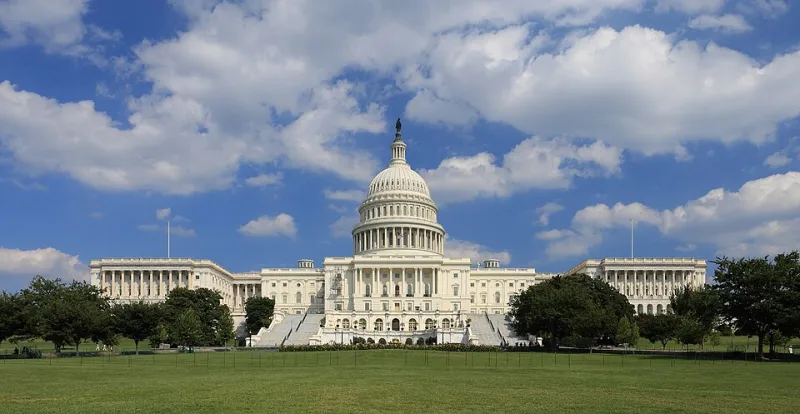
Photo: Martin Falbisoner, CC BY-SA 3.0, via Wikimedia Commons
The quorum clause is easy to read past. Article I, Section 5 says that a majority of each house constitutes a quorum to do business, that a smaller number may adjourn from day to day, and that absent members may be compelled to attend "in such Manner, and under such Penalties as each House may provide." The words are spare, almost administrative. But they answer a foundational question: when may a legislature act, and who decides whether it is actually present?
In 2026, that question has lost its administrative feel. The midterm results have left Congress with margins narrow enough that a handful of absences can change the arithmetic of a floor day. The Constitution does not require every member to be in the chamber; it requires enough members to constitute a majority. The difference between those two ideas is where procedural brinkmanship lives.
A Majority, Not a Mandate
On paper, the House quorum is 218 members and the Senate quorum is 51. Those numbers are not fixed by the Constitution; they follow from the size of each chamber. What is fixed is the principle that a majority must be present before business can proceed. The framers did not invent the quorum. They inherited it from parliamentary practice and adapted it to a federal legislature whose members would travel long distances and whose attendance could not be assumed.
The clause also anticipates the obvious problem. If a majority is required, a minority might try to break the quorum by staying away. The Constitution therefore allows a smaller number to adjourn and to compel attendance. It does not let that smaller number legislate. It lets it keep the institution alive until the majority returns—or until political pressure makes return unavoidable.
That design reflects a certain faith in self-policing. Each house judges its own members' elections and qualifications, and each house sets its own rules for attendance. The Constitution gives Congress the tools, but it does not describe how harshly they should be used. A chamber may send the Sergeant at Arms after absent members. It may impose fines or other penalties. It may, in extreme cases, have members brought to the floor. The choice is political as much as constitutional.
The Reed Precedent and the Meaning of Presence
The most famous congressional fight over quorum came in 1890, when Speaker Thomas Brackett Reed confronted Democrats who refused to answer a roll call in order to deny the House a quorum. Reed directed the clerk to count members who were physically present, whether or not they voted. The resulting uproar produced the "Reed Rules" and a lasting change in House procedure. Two years later, in United States v. Ballin, the Supreme Court upheld the House's authority to determine its own quorum rules so long as they did not contradict the Constitution.
Ballin is not a sweeping license. It is a recognition that the Constitution entrusts each chamber with the details of its own proceedings. But it also illustrates the central tension in Article I, Section 5: the clause is a constitutional rule enforced by political institutions. Courts are unlikely to rescue a chamber from a quorum dispute that the chamber itself has the power to resolve.
That is why quorum fights tend to be tests of endurance rather than legal argument. The side that can afford to wait, or that can impose a higher political cost on the other side, usually wins. The Constitution supplies the arena; it does not supply the referee.
Absence as Leverage
State legislatures offer the clearest recent examples of absence used as leverage. In 2003, Texas Democrats left the state to deny the Texas House a quorum over redistricting. In 2011, Wisconsin Senate Democrats left for Illinois to block a vote on collective bargaining changes. In Oregon, Republican senators walked out repeatedly in 2019 and 2023, and voters later approved a measure disqualifying legislators with a certain number of unexcused absences from re-election. Those episodes arose under state constitutions, not Article I, Section 5, but they reveal the same logic: when the margin is thin, physical presence becomes a form of power.
Congress has its own version of that logic. A quorum call can be used to stall, to summon leaders to the floor, or to force a public explanation of why business has stopped. In the Senate, quorum calls are often routine time-killers; in the House, they can be weapons of delay. The difference between a routine call and a crisis is usually not legal. It is a matter of how many members are willing to stay away and how long the majority is willing to wait.
The 2026 margins make that calculus sharper. When a party's majority depends on a few seats, a single extended absence can freeze a committee, complicate a floor schedule, or deny a vote its legitimacy. The Constitution does not require unanimous attendance, but it does require a majority for business. In a closely divided chamber, the gap between those two facts is narrow enough to be exploited.
Can the Clause Still Do Its Job?
Article I, Section 5 was written for a legislature in which attendance was difficult and majorities were expected to be broad enough to absorb ordinary absences. It was not written for a world of live floor tracking, same-day travel, and one-vote margins. Yet the clause has survived because it is flexible. It lets each chamber decide how to compel attendance and what penalties to impose. That flexibility is also its weakness. A chamber that refuses to enforce attendance invites the very minority veto the clause was meant to prevent.
The deeper question is not whether the quorum clause is obsolete. It is whether Congress is willing to use the tools the Constitution gives it. A rule that depends on self-policing can work only if the political costs of absence are real. If they are not, the quorum becomes a trap: not because the Constitution is unclear, but because the institution has chosen not to make it clear.
For citizens, the lesson is that floor procedure is not mere inside baseball. The quorum clause is a constitutional allocation of power, and every quorum call is a small rehearsal of how that allocation works in practice. In 2026, with control of Congress resting on a handful of seats, the rehearsal matters more than usual.