Ten Days and an Empty Chamber: The Constitutional Loophole That Lets Bills Vanish
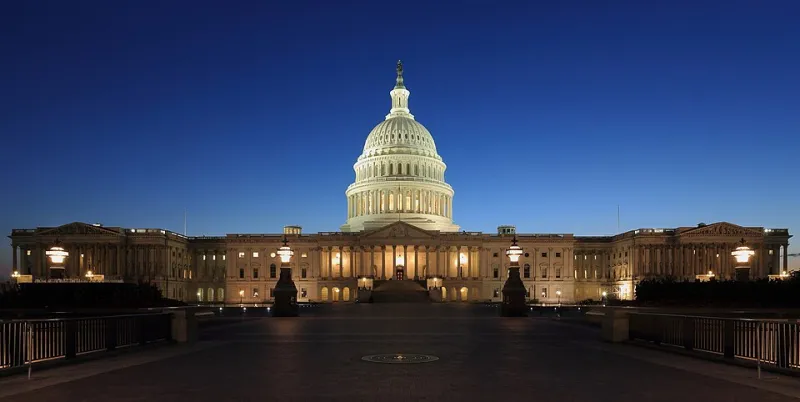
Photo: Martin Falbisoner, CC BY-SA 3.0, via Wikimedia Commons
The Constitution does not use the phrase “pocket veto.” It does not need to. Article I, Section 7, Clause 2 sets out a simple clock: once Congress presents a bill to the President, he has ten days—Sundays excepted—to sign it or return it with objections. If he does neither, the bill becomes law “in like Manner as if he had signed it, unless the Congress by their Adjournment prevent its Return, in which Case it shall not be a Law.” That final clause is the constitutional seed of the pocket veto, and it is deceptively small. It creates a way for a bill to die without a formal veto message, without a public explanation, and without the override vote that ordinarily follows a presidential rejection.
The Text and the Ten-Day Clock
The clause is a study in conditional timing. The ten-day period is not ten legislative days; it is ten calendar days, with Sundays excluded. The President’s options are positive—sign—or negative—return with objections. The third option is inaction. In ordinary circumstances, inaction produces a law. But the Framers added an exception for adjournment, recognizing that a President cannot return a bill to a Congress that is no longer in town.
The ambiguity lies in the word “adjournment.” Does it mean any break in business, including a long weekend or a holiday recess? Or does it mean the final adjournment that ends a Congress? The answer matters enormously. If every recess triggered the exception, the President could pocket veto bills during routine breaks. If only final adjournments count, the pocket veto is confined to the end of a session or Congress.
The Pocket Veto Case and Its Limits
The Supreme Court addressed the question in The Pocket Veto Case, 279 U.S. 655 (1929). The facts were ordinary: a bill passed during a session, presented to the President, and left unsigned when Congress adjourned sine die before the ten days expired. The Court held that the adjournment prevented the bill’s return, so the bill did not become law. The ruling gave the pocket veto a firm constitutional footing, but it also suggested that the exception was tied to final adjournment, not to every temporary recess.
Later decisions narrowed the practice. In Wright v. United States, 302 U.S. 583 (1938), the Senate adjourned for three days, and the President returned the bill to the Secretary of the Senate. The Court held that the bill became law because the short adjournment did not prevent return; the President could deliver his objections to an officer of the House. In Kennedy v. Sampson, 511 F.2d 430 (D.C. Cir. 1974), the D.C. Circuit held that an intersession adjournment did not defeat return when Congress had authorized agents to receive veto messages. Together, these cases suggest that the pocket veto is strongest at the end of a Congress, when there is no chamber to receive a message and no agent designated to accept one.
The Pro Forma Problem
Modern congressional practice has made the pocket veto more contested. Since the mid-2000s, both chambers have used pro forma sessions—brief, often seconds-long meetings held every few days—to avoid being formally adjourned. The original purpose was to block recess appointments, but the practice has a second effect: if Congress is not adjourned, the ten-day clock keeps running, and a bill the President leaves unsigned can become law.
This has produced a constitutional standoff without a definitive Supreme Court ruling. Presidents have asserted the power to pocket veto bills during holiday recesses; Congress has insisted that pro forma sessions keep it in session and that designated officers can receive veto messages. The lower courts have generally favored Congress’s view, but the Supreme Court has not revisited The Pocket Veto Case in the pro forma era. The result is a zone of uncertainty that depends on the calendar, the Lawyers’ offices, and the willingness of either branch to litigate.
Why 2026 Matters
The 2026 midterms were held on November 3, and the 119th Congress will expire on January 3, 2027. Between those dates lies a lame-duck session with a familiar temptation: pass a bill late, present it to the President with fewer than ten days left before final adjournment, and let the clock run out. If Congress adjourns sine die before the ten days expire, the President can do nothing and the bill dies. No veto message. No override vote. No recorded objections.
The practical loophole is the absence of a message. A regular veto forces the President to state objections and sends the bill back to Congress, where a two-thirds majority can override. A pocket veto produces silence. The bill simply does not become law. For a President facing a hostile or divided Congress, that silence can be more useful than a public veto.
The Score the Constitution Keeps
The pocket veto is not a constitutional mystery; it is a calendar problem dressed in clause language. The text permits it only when adjournment prevents return. The cases confine it to final adjournments and to circumstances where no agent can receive the President’s objections. The 2026 lame-duck session could test those boundaries again. If Congress schedules pro forma sessions through December and January, the ten-day clock may frustrate a pocket veto. If Congress adjourns sine die and leaves no receiving officer, the President may let a bill vanish.
For citizens, the lesson is procedural but consequential. The Constitution’s veto provisions are not only about yes or no; they are about timing, adjournment, and the machinery of return. A bill can die not because it was rejected, but because the chamber emptied before the clock ran out. That is the pocket veto’s quiet power—and the reason the legislative calendar is never merely administrative.