The Quiet Amendment: Why the Third Amendment Still Speaks to Privacy and Policing
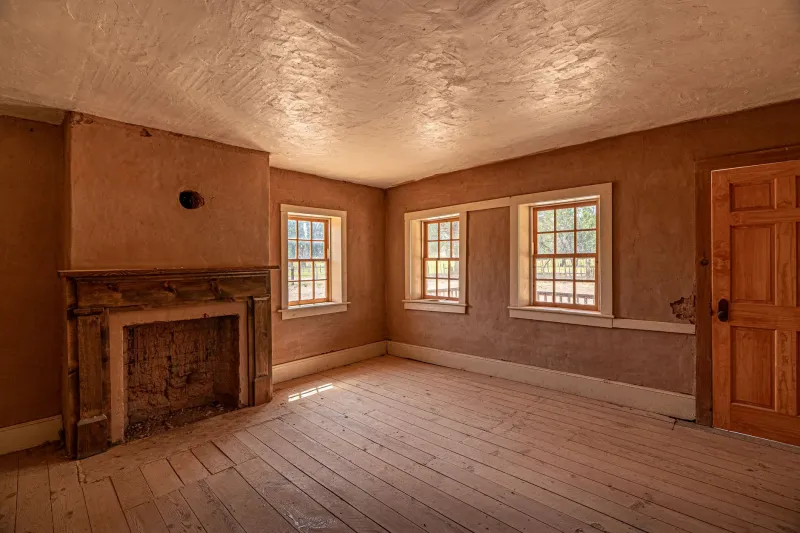
Of the ten amendments that make up the Bill of Rights, the Third is the one most often skipped. It has no marquee Supreme Court case, no civil-rights icon, no annual commemoration. Yet its text addresses a question that remains central to constitutional government: when may the state use private homes for public force? The answer, the Framers wrote, depends on consent and law.
The amendment reads: 'No Soldier shall, in time of peace be quartered in any house, without the consent of the Owner, nor in time of war, but in a manner to be prescribed by law.' That language arose from a specific colonial grievance, but its logic reaches beyond barracks and beds.
A Grievance Before It Was a Clause
The Third Amendment did not emerge from abstract theory. It grew out of colonial resistance to British quartering policies. The Quartering Act of 1765 required colonial assemblies to provide supplies and quarters for British troops, and later measures allowed soldiers to be lodged in private buildings, including inns and vacant houses. For colonists, these policies were not merely inconvenient. They represented executive power imposed without local consent and a standing army that could be used to enforce unpopular laws.
The Declaration of Independence listed among the king's abuses the practice of quartering 'large bodies of armed troops among us.' Several state constitutions adopted during the Revolution included protections against quartering. When the Bill of Rights was drafted and ratified in 1791, the Third Amendment translated that experience into a concise rule. It was not mainly a privacy provision in the modern sense. It was a structural check on standing armies, executive power, and the use of private property for military purposes.
A Narrow Text With a Broad Logic
The amendment is narrow. It speaks of 'Soldiers,' 'houses,' and 'quartering.' It does not say that the home is immune from all government intrusion, nor does it create a general right to be free from police activity. Its direct command is specific: in peacetime, no soldier may be quartered in a private house without the owner's consent; in wartime, quartering must follow legal procedures.
Even so, the clause rests on a broader constitutional idea. The home is not simply another piece of real estate available for government use. It is a place where people exercise autonomy, raise families, and hold private life apart from the state. The Third Amendment reinforces that idea by requiring consent or legislative authorization before military force enters the household. In this sense, it resembles a due-process guarantee: even in war, quartering must follow law.
The Case That Kept It Alive
The Third Amendment has produced remarkably little federal litigation. Its leading appellate decision remains Engblom v. Carey, decided by the Second Circuit in 1982. During a strike by correction officers in New York, National Guard troops were housed in employee residences at a state correctional facility. The officers argued that the arrangement violated the Third Amendment.
The Second Circuit agreed that the amendment could apply. It held that National Guard members counted as soldiers for purposes of the clause and that the Third Amendment applied to the states through the Fourteenth Amendment. The decision did not reach the Supreme Court, and its factual setting was unusual. But Engblom v. Carey gave the forgotten amendment a modern foothold: the clause is not a dead letter, even if its direct applications are rare.
From Barracks to Body Cameras
Modern debates rarely involve soldiers sleeping in spare bedrooms. They involve police tactics, domestic military support, and emergency authority. No-knock raids, for example, are governed primarily by the Fourth Amendment's prohibition on unreasonable searches and seizures. Courts ask whether officers had a warrant, whether the knock-and-announce rule applied, and whether the intrusion was reasonable. The Third Amendment is not usually the lead argument in such cases.
Still, the amendment supplies a constitutional tradition that treats the home as a place of special solicitude. When judges and legislators debate how forcefully the state may enter a home, the Third Amendment's logic can inform the background assumptions: the home is not a command post, and the burden should fall on the government to justify intrusion under law. The clause also speaks to debates over military support to domestic policing. The Posse Comitatus Act of 1878 generally bars federal troops from domestic law enforcement, and the Insurrection Act contains narrow exceptions. When officials debate whether National Guard units or federal forces should be deployed in American communities, the Third Amendment's consent principle is part of the constitutional atmosphere, even when it is not the controlling text.
Emergency Powers and the Consent Principle
Emergencies test whether law or necessity governs. The Third Amendment anticipates that wartime quartering may be necessary, but it does not leave the decision to unregulated military discretion. It requires that quartering be 'prescribed by law.' That requirement is modest, but important: the legislature must set the terms, and property owners must be given a legal process rather than an ad hoc demand.
In 2026, the Third Amendment is unlikely to be the centerpiece of most constitutional litigation. Its direct scope remains narrow, and courts have not used it to create a general privacy code. But the clause still asks a useful civic question: when the state wants to use a private home for public force, has the people's representative body authorized it, and has the owner consented? That question is as relevant to a democracy facing emergencies as it was to colonists facing redcoats.
What the Clause Can Still Teach
For students of the Constitution, the Third Amendment is a lesson in how even minor clauses carry principles. It shows that the Bill of Rights is not only a list of courtroom remedies. It is also a statement about the relationship between citizens, their homes, and the government's coercive power. The Third Amendment may not generate many headline cases, but it preserves a simple idea with enduring value: in a constitutional republic, the home is not simply quarters for whoever holds the coercive power of the moment.