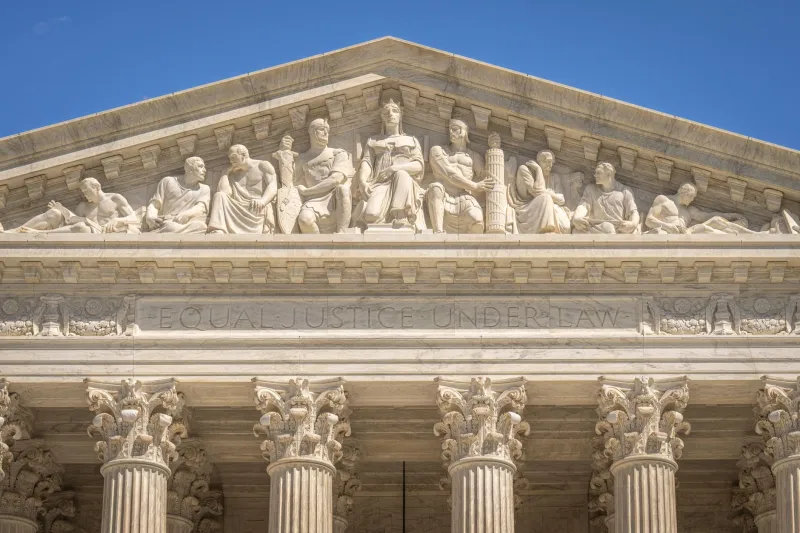
The Declaration's Promise and the Constitution's Machinery: America's 250th Year and the Argument Over Founding Ideals
As the United States marks its semiquincentennial in 2026, public celebrations will return often to a familiar pairing: the Declaration of Independence and the Constitution. The two documents are regularly treated as a single founding inheritance, as if the soaring language of 1776 and the structural rules of 1787 were chapters of one book. They are not. The Declaration announces a political creed; the Constitution builds a governing machine. Confusing the two is not new, but in an anniversary year it deserves fresh attention.
Two Documents, Two Tasks
The Declaration of Independence is, first, a legal and political separation document. Its central work is to explain why the American colonies regarded themselves as free and independent states. Its second paragraph supplies the famous language: that all men are created equal, that they are endowed with unalienable rights, and that governments derive their just powers from the consent of the governed. Those claims are aspirational and moral. They are not a blueprint for institutions.
The Constitution is a different kind of text. It allocates power among branches and between the federal government and the states. It establishes elections, qualifications for office, judicial authority, and an amendment process. It also contains compromises, including provisions protecting slavery, that sit uneasily beside the Declaration's universal language. The Constitution was ratified as enforceable law; the Declaration was not. Courts do not strike down statutes because they violate the Declaration in the way they enforce the Constitution.
That difference matters because anniversary debates often blur aspiration and authority. A citizen may rightly say that the Declaration's promise of equality is a national ideal. It does not follow that the Declaration alone resolves a modern question about voting rules, affirmative action, or the scope of federal power. Ideals can judge institutions; they do not replace constitutional text and precedent.
From Gettysburg to the Fourteenth Amendment
The most important bridge between the two documents was built in the nineteenth century. Abraham Lincoln's Gettysburg Address in 1863 recast the Declaration as the nation's founding promise and called for a new birth of freedom. Lincoln did not treat the Declaration as a statute. He treated it as a standard against which the Constitution's compromises could be measured.
After the Civil War, the Reconstruction amendments gave that standard more legal shape. The Thirteenth Amendment abolished slavery. The Fourteenth Amendment guaranteed privileges or immunities, due process, and equal protection of the laws. The Fifteenth protected voting rights against racial exclusion. In later cases and debates, the equal protection clause became a central site for arguing about whether the Constitution embodies the Declaration's equality principle or only a narrower rule against certain legal classifications.
That argument continues in 2026. Some originalists emphasize the original public meaning of the Reconstruction amendments and warn against reading abstract natural-rights language directly into constitutional law. Others insist that the Declaration's principles informed the Reconstruction generation and should inform interpretation today. Both positions can claim historical materials. Neither can be settled by repeating the phrase all men are created equal.
The Semiquincentennial and Selective Memory
Anniversaries encourage selective memory. One celebration may emphasize the Declaration's universal promise; another may emphasize the Constitution's careful structure. Both are partial. The founding era produced extraordinary claims about liberty and extraordinary exclusions from it. The Constitution protected slavery in several ways, and the Declaration's author was himself an enslaver. Later generations used the Declaration's language to expose those contradictions.
In 2026, debates over founding ideals are therefore also debates over how to read the Constitution. Does the document's meaning lie chiefly in its original public meaning, in its structural design, in its later amendments, or in a tradition of aspirational reading? The Declaration can inform all four approaches, but it cannot decide among them by itself.
What the Declaration Does Not Do
The Declaration does not create federalism. It does not separate powers among three branches. It does not establish judicial review, the Bill of Rights, or the rules for impeachment. It does not tell Congress how to regulate commerce or tell courts how to review administrative agencies. Those questions arise from the Constitution's text and structure, from statutes, and from generations of case law.
This is not a reason to diminish the Declaration. It is a reason to use it for what it is. The Declaration is a statement of purpose. The Constitution is a set of instructions. A statement of purpose can illuminate the instructions, but it cannot replace them. When a lawyer argues that a modern policy violates the nation's founding creed, the next question must be: which constitutional provision, precedent, or structural principle makes that creed enforceable law?
Reading 2026 Through 1776
The semiquincentennial will invite Americans to ask what the founding means. That is a civic question, not only a historical one. The Declaration's promise has been used by abolitionists, suffragists, civil rights marchers, and countless others to press the Constitution toward greater inclusion. That is a genuine and important part of American constitutional history.
But the anniversary also offers a chance to be precise. The Declaration's ideals can inspire constitutional argument. They cannot substitute for it. The Constitution's machinery may frustrate those ideals, but it also provides the lawful means by which they can be pursued. In 2026, the most useful civic lesson may be the oldest one: distinguish the promise from the procedure, and then ask how the procedure can be made to serve the promise.