No Prize to Condemn: Why the Marque and Reprisal Clause Cannot Be Retooled for Cyberspace

Photo: (Lobsterthermidor (talk) 00:40, 19 February 2013 (UTC)), Public domain, via Wikimedia Commons
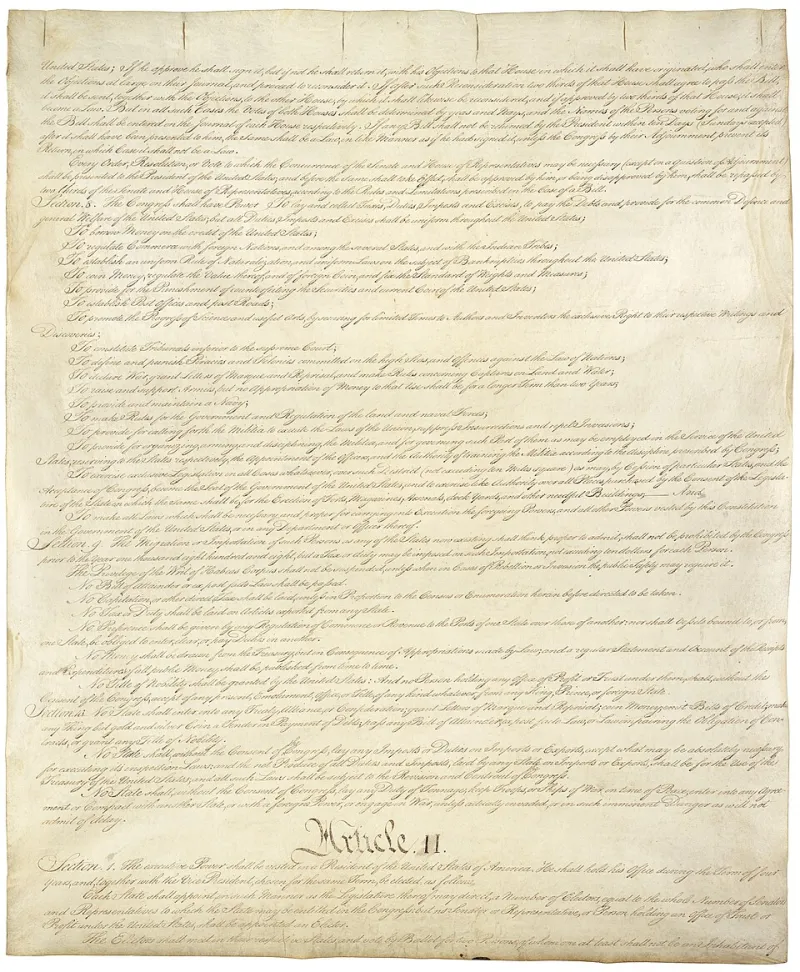
Few clauses of Article I have enjoyed so quiet a retirement. Section 8, Clause 11 gives Congress power "To grant Letters of Marque and Reprisal, and make Rules concerning Captures on Land and Water." The United States has not issued a letter of marque since the War of 1812. Yet the clause reappears with a certain regularity: in a 2001 bill introduced after the September 11 attacks, in proposals aimed at Somali piracy, and now in speculation about whether Congress could commission private operators to conduct offensive cyber operations abroad. The appeal is easy to understand. If the Constitution already contains a mechanism for deputizing private actors to wage limited hostilities, why not adapt it to a domain where attribution is hard and retaliation is slow?
The answer lies less in the phrase itself than in the machinery that once surrounded it. Read carefully, Clause 11 does not simply permit Congress to license private violence. It presupposes an entire legal apparatus — a thing to capture, a court to condemn it, and a neutral party with standing to object — and that apparatus is precisely what cyberspace lacks.
A Clause That Appears Twice
The first interpretive clue is structural. The Constitution mentions letters of marque not once but twice. Article I, Section 10 forbids states from granting them without congressional consent, a prohibition carried over almost verbatim from the Articles of Confederation. The Framers plainly knew what a letter of marque was, regarded it as a familiar instrument of statecraft, and deliberately placed control over it in a single federal hand.
That double appearance is often overlooked in revival proposals. It suggests that the clause was understood as a means of regulating privateering, not as a general reservoir of authority to enlist private persons in armed conflict whenever Congress finds it convenient. The Constitution contemplated private force, then built a fence around it.
What a Letter Actually Did
A letter of marque converted a private vessel from a pirate into a lawful belligerent. It was a document of precision. It named the vessel, bonded the owner, identified the enemy, and set the conditions under which property could be seized. A privateer operating outside its letter was a pirate again, subject to the same fate.
Equally important, the letter never stood alone. Captures were brought into admiralty prize courts, which determined whether the seizure was lawful and distributed the proceeds. Article III's grant of admiralty and maritime jurisdiction, together with Congress's power under Clause 11 itself to "make Rules concerning Captures," supplied the procedural spine. Neutrals whose shipping was harmed could press claims through diplomatic channels because there was a court record to argue about.
Three elements, then, did the constitutional work: a physical res that could be seized and condemned, a forum that could adjudicate title, and a boundary that protected the interests of states not party to the conflict.
The Missing Res
Cyber operations produce no res in any sense the law of prize would recognize. Data is not cargo. An intruded server is not a captured vessel. A disrupted network yields no property title that a court could condemn and distribute. Courts of admiralty have jurisdiction over vessels, cargo, and maritime transactions; they have no vocabulary for the confiscation of a botnet.
Without a prize, a letter of marque becomes something quite different from its historical antecedent: a bare promise of indemnity for acts that would otherwise be crimes. That is not a revival of Clause 11. It is a new authorization of private warfare wearing an eighteenth-century coat.
The Missing Forum and the Missing Neutral
The prize court mattered not only because it resolved ownership but because it made the commissioning state answerable. A privateer who exceeded his authority created a dispute his sovereign had to defend, and the forum supplied the facts. The system was rough, but it was accountable.
No comparable forum exists for digital reprisals. A private operator who misidentifies a target, harms a hospital network, or compromises a cloud provider serving third-country customers leaves no capture to condemn and no record a neutral can litigate. Congress can legislate rules for captures on land and water; it cannot easily legislate a rule for a capture that never happens.
The Delegation Question
Even setting the prize problem aside, authorizing private persons to conduct hostilities raises familiar structural objections. The President is Commander in Chief under Article II, and operational command is an executive function. A private operator acting on a letter is neither clearly a member of the armed forces nor a civilian employee, which raises questions under the Appointments Clause about the exercise of significant governmental authority. It also places Congress in the position of directing military effects through intermediaries it does not control.
Federal statutes already embody the older constitutional instinct. The Neutrality Act, codified at 18 U.S.C. § 960 and neighboring provisions, criminalizes private expeditions and the fitting out of armed ventures against nations at peace with the United States. Those provisions are the modern residue of the same policy that let the marque clause fall into disuse: private force is a foreign-relations hazard, and Congress chose to suppress rather than license it.
International law supplies a further constraint. The 1856 Declaration of Paris abolished privateering among its signatories; the United States declined to accede at the time, but has not issued a letter since. Under the modern law of state responsibility, conduct carried out by persons acting on a state's instructions, direction, or control is attributable to that state. A cyber privateer would thus not insulate the United States — it would implicate it, while stripping away the formal chain of command that makes attribution and restraint possible.
What the Clause Still Teaches
None of this means the clause is a dead letter in the interpretive sense. It remains a useful measuring stick for contemporary proposals to authorize "hack back" and to hire offensive contractors. Those proposals can be tested against three questions the Framers' practice suggests: Is the object of the operation defined with the precision of a letter? Is there a forum in which the legality of the action can be adjudicated rather than merely asserted? And is there a boundary that protects parties who are not combatants?
A statute that cannot answer those questions is not a modern letter of marque. It is a delegation of undeclared conflict, and the Constitution's treatment of privateering is a warning about what happens when the license outlives the architecture. The clause is best read not as a dormant tool awaiting a digital use, but as a reminder that the Framers thought private force tolerable only when it was named, bounded, and reviewed.