The Verdict Congress Cannot Pronounce: Reading the Attainder Clause in the Age of Targeted Sanctions
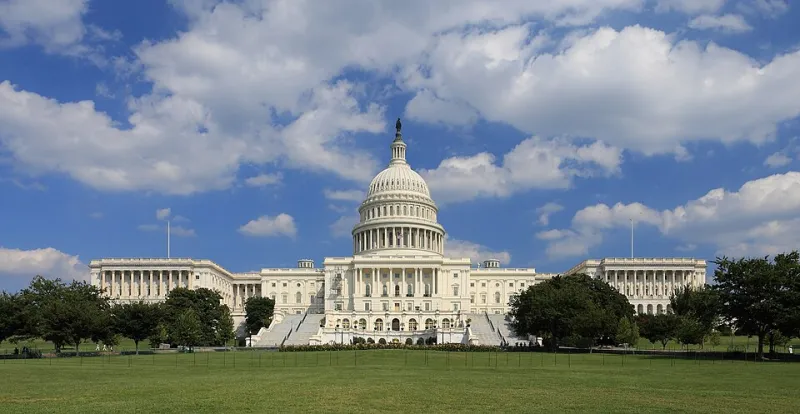
Photo: Martin Falbisoner, CC BY-SA 3.0, via Wikimedia Commons
When Congress names a person, a company, or a category of actors in a statute and imposes a disabling consequence, the Constitution asks a hard question: is this law a regulation, or is it a verdict? Article I, Section 9, Clause 3 provides that "[n]o Bill of Attainder or ex post facto Law shall be passed" by Congress. Section 10 imposes a similar restriction on the states. The clause is terse, but its purpose is structural: legislatures may enact general rules, but they may not substitute legislative judgment for a trial, a conviction, and a sentence.
That concern has returned to public attention as Congress and federal agencies impose targeted sanctions, corporate penalties, and individual restrictions. The measures are often framed as foreign-policy tools, regulatory safeguards, or emergency responses. Courts generally uphold them. Yet the attainder ban remains a live limit on how far lawmakers may go in writing punishment directly into the statute book.
A Clause With a Long Memory
The Framers did not invent the word "attainder." English practice had long allowed Parliament to declare a person guilty of treason or felony by legislation, often with brutal consequences for the person's heirs and property. Colonial legislatures had also used bills of pains and penalties—measures that imposed lesser punishments, such as fines, disqualifications, or banishment, without a judicial trial. The Constitution's ban addresses both forms. A bill of attainder typically imposed death; a bill of pains and penalties imposed other punishments. The modern doctrine treats both as prohibited legislative punishments.
James Madison and Alexander Hamilton understood the clause as a safeguard against legislative tyranny. The legislature, Hamilton wrote in Federalist No. 78, threatens liberty when it exercises judicial power. The attainder ban enforces a separation-of-powers principle: punishment should follow a judicial process, not a legislative declaration.
From Names to Classes: How Courts Test a Punishment
The Supreme Court's modern attainder jurisprudence is functional rather than formal. The question is not whether a statute calls itself a punishment, but whether it inflicts punishment on named individuals or on easily ascertainable members of a group without a judicial trial.
In United States v. Lovett (1946), the Court struck down an appropriations rider that barred payment of salaries to three named federal employees accused of subversive activities. Congress had not held a trial; it had simply legislated a penalty against specific people. The Court treated the rider as a bill of attainder. The case established that the clause protects individuals even when the sanction is financial and even when Congress acts through an appropriations measure.
Nearly two decades later, United States v. Brown (1965) applied the clause to a statute that made it a crime for a member of the Communist Party to serve as an officer or employee of a labor union. The Court found that the law singled out an easily ascertainable group and imposed a disabling punishment for past or present membership. The opinion emphasized that Congress cannot accomplish through legislation what it could not accomplish through a criminal trial.
The Court has also recognized limits. In Nixon v. Administrator of General Services (1977), it upheld a statute directing the government to take custody of President Richard Nixon's papers and tapes, concluding that the measure served regulatory and historical-preservation purposes rather than punitive ones. The decision illustrates that a law can burden a specific person without being an attainder if its purpose and effect are not punishment.
The Sanctions Question: Regulation, Foreign Policy, or Punishment?
Modern targeted sanctions test the doctrine in a different setting. Congress and the executive branch impose asset freezes, travel bans, and restrictions on dealings with named individuals, entities, and groups. The Magnitsky Act of 2012 and later sanctions programs are prominent examples. These measures often identify particular persons by name or by clear criteria, and they impose serious burdens.
Defenders argue that sanctions are regulatory and preventive, not punitive. They serve foreign-policy objectives, protect financial systems, and pressure bad actors without imposing criminal punishment. Courts have generally deferred to the political branches on national-security and foreign-affairs matters, treating sanctions as a form of economic regulation rather than a bill of attainder. The availability of administrative review and the possibility of delisting also weigh against a punitive characterization.
Critics respond that the line between regulation and punishment can become thin. When a statute names a person or a company and imposes a disabling consequence, the functional concerns that animated Lovett and Brown are present. The clause does not disappear because the label is "sanctions" rather than "penalty." The debate is not about whether Congress may regulate foreign commerce or protect national security; it is about whether Congress may effectively pronounce a verdict without the procedural protections of a trial.
Similar questions arise with corporate penalties and individual restrictions. A statute that targets a particular firm for retrospective punishment may raise attainder concerns, while a general regulatory regime that applies prospectively to all similarly situated firms generally does not. The distinction turns on specificity, punitive intent, and the availability of judicial process.
Why Courts Rarely Say Attainder—and Why the Clause Still Matters
Attainder claims rarely succeed. Courts are cautious about second-guessing Congress's purposes, especially in foreign affairs and national security. They also recognize that many burdensome laws serve legitimate regulatory ends. The clause is not a general prohibition on harsh legislation; it is a prohibition on a particular method of imposing punishment.
Still, the clause performs an important constitutional function. It reminds Congress that legislation is not a substitute for adjudication. If a statute names an individual and imposes a punishment without a trial, the attainder ban supplies a basis for judicial review. The clause also reinforces the separation of powers and the rule of law. It prevents the legislature from using its lawmaking power to settle particular cases in the manner of a court.
In 2026, as targeted sanctions and individual restrictions remain central tools of federal policy, the attainder clause deserves more than a footnote. It is a structural safeguard against legislative punishment, and it asks courts and citizens to look past labels to the substance of what a law does. Congress may regulate broadly; it may not pronounce a verdict.