A Speed Bump, Not a Cap: The Twenty-Seventh Amendment in 2026
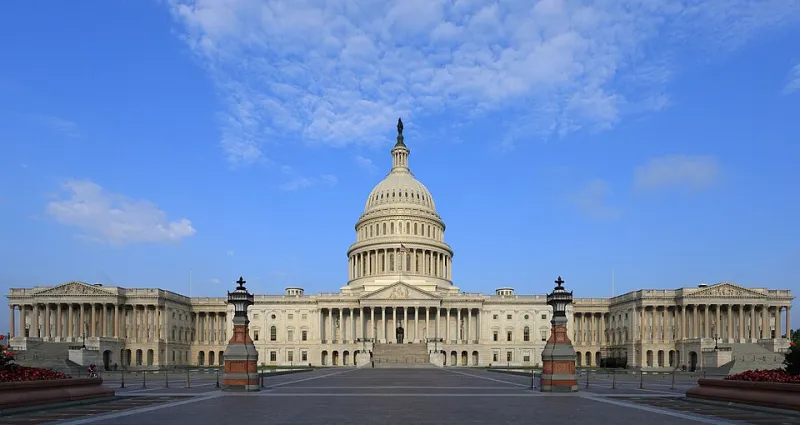
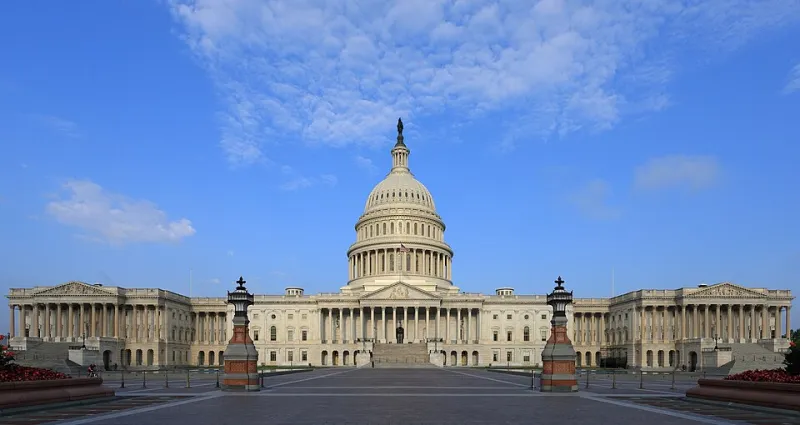
Photo: Martin Falbisoner, CC BY-SA 3.0, via Wikimedia Commons
A Clause That Waited Two Centuries
When Congress debates its own pay, the Constitution supplies a rule that is easy to overlook and hard to mistake for a cap. The Twenty-Seventh Amendment—often called the Madison Amendment—provides that “No law, varying the compensation for the services of the Senators and Representatives, shall take effect, until an election of Representatives shall have intervened.” It is a timing provision, not a spending limit. It does not freeze salaries, require voter approval, or ban raises. It requires an election of the House to come between passage and effect.
That distinction matters in 2026. Pay and ethics questions are again part of the congressional agenda, and the amendment is sometimes invoked as if it were a general check on legislative self-dealing. It is narrower than that. But it is not meaningless. Its history, its text, and its enforcement problems explain why a 1789 proposal became a live—if modest—rule in modern politics.
From Madison’s List to the Archivist’s Desk
The amendment began as one of twelve proposals James Madison sent to the states in 1789. The package included what became the Bill of Rights, but the pay provision was not among the first ten. It languished for generations. Ohio ratified it in 1873, apparently as a protest against a congressional pay raise, but the necessary number of states did not follow. For most of the twentieth century, the proposal looked like a constitutional relic.
Then a University of Texas student, Gregory Watson, wrote a paper arguing that the amendment remained viable because Congress had set no deadline for ratification. His campaign helped revive state consideration. In May 1992, the Archivist of the United States certified the amendment as ratified, 203 years after it was proposed. The episode is a reminder that Article V’s machinery can produce surprises—and that an old text can become operative long after its authors are gone.
What the Text Does—and Does Not—Say
The amendment’s grammar is precise. It reaches a “law” that “var[ies] the compensation for the services” of senators and representatives. It bars that law from taking effect until “an election of Representatives shall have intervened.” The choice of the House is notable. The amendment does not wait for a Senate election, a presidential election, or a new Congress as such. It waits for the voters to choose the House.
Within that narrow frame, the rule is real. A pay measure passed before the 2026 midterms could not take effect until after that election. A measure passed after the election would have to wait for the next House election. The amendment thus prevents the most immediate form of a midnight pay raise, in which members vote an increase and receive it without facing voters first.
Beyond that, the text leaves much unresolved. It does not say how large an increase may be, whether a raise must be permanent or temporary, or whether voters must approve it. It does not, by its terms, address every benefit or allowance that might be attached to congressional service. And whether automatic cost-of-living adjustments count as a “law varying compensation” is contested; the Supreme Court has not settled the outer edges of the clause. In practice, the amendment is a procedural speed bump, not a comprehensive compensation code.
The Enforcement Problem
A constitutional rule without a referee can become a slogan. That is part of the Twenty-Seventh Amendment’s story. In Schaffer v. Clinton, decided by the U.S. Court of Appeals for the District of Columbia Circuit in 2001, members of Congress challenged the Ethics Reform Act of 1989 under the amendment. The court dismissed the case for lack of standing, leaving the merits unresolved. The decision did not erase the amendment, but it made clear that enforcement would often depend on politics rather than litigation.
That does not make the rule irrelevant. It means the amendment operates chiefly through public accountability. If members vote for a pay change, the delay forces the issue into at least one election cycle before the change takes effect. Voters can weigh the vote, and challengers can raise it. The amendment does not guarantee that voters will care, or that they will punish a raise. It guarantees only an interval.
Why 2026 Still Cares
In 2026, the congressional pay debate is less about a single dramatic raise than about a cluster of related questions: whether salaries should be adjusted for inflation, how benefits and allowances are disclosed, and whether ethics rules should be tightened. The Twenty-Seventh Amendment speaks directly to only one slice of that debate. It does not answer whether pay is too high or too low, and it does not regulate stock trading, travel, or campaign finance.
Its relevance is structural. Any law that varies compensation must clear the election requirement, which makes pay votes easier to see and harder to bury. That is a modest form of accountability, but it is the kind the amendment was designed to provide. The clause does not trust Congress to set its own pay without a public interval; it does not, however, take the decision away from Congress.
A Check on Timing, Not a Verdict on Pay
The Twenty-Seventh Amendment is often described as a pay amendment, and that label is accurate but incomplete. It is a pay-timing amendment. It reflects a suspicion of immediate self-pay, not a theory of what legislators should earn. After 203 years of dormancy and more than three decades of operation, it remains a small but genuine feature of the constitutional landscape.
In 2026, its lesson is less about the size of a paycheck than about the calendar. The Constitution can slow a decision down without settling it. For citizens watching a pay or ethics debate, that is worth remembering: the Twenty-Seventh Amendment is a speed bump, not a cap—and a speed bump can matter even when it does not stop the car.