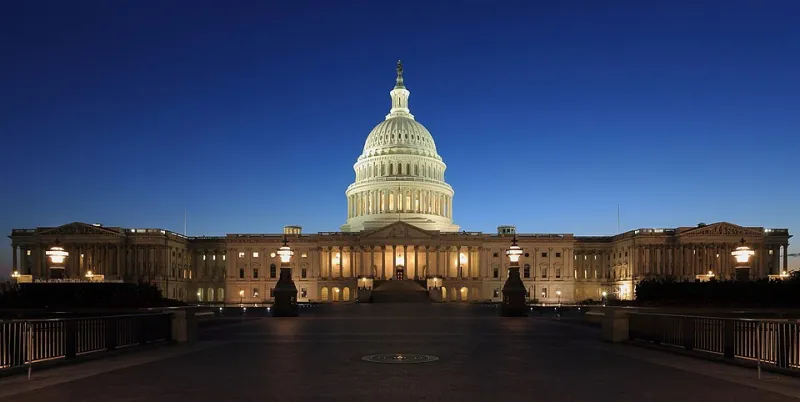
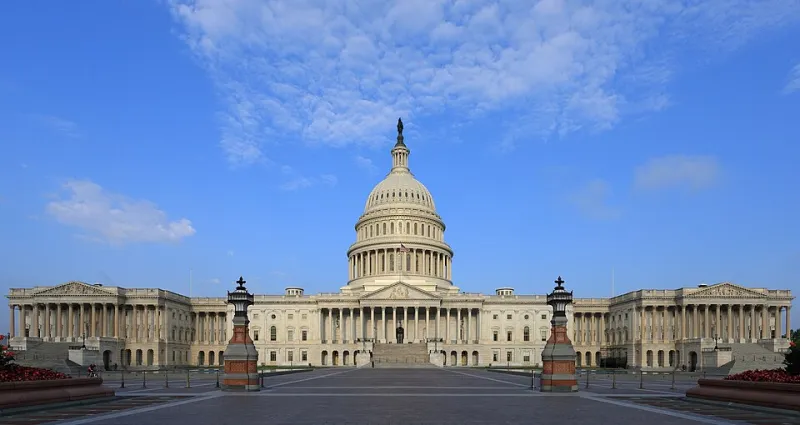
The Geography of Consent: How the Enclave Clause Still Draws the Boundaries of Federal Power
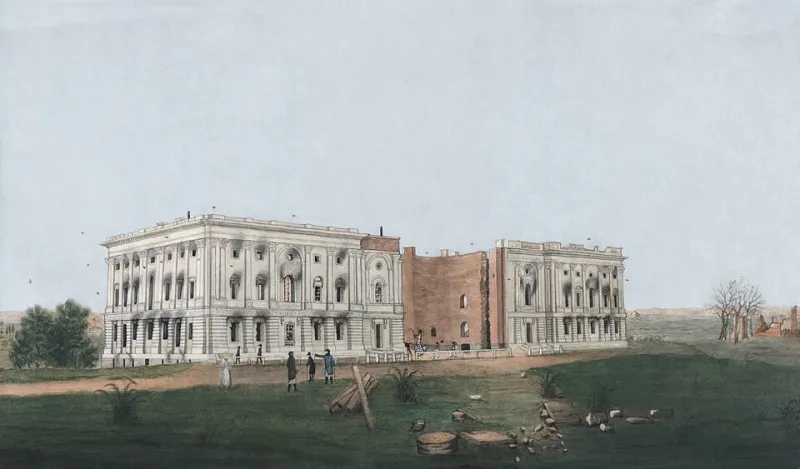
Photo: George Munger, Public domain, via Wikimedia Commons
Few provisions in Article I, Section 8 receive less public attention than Clause 17. It grants Congress power 'To exercise exclusive Legislation in all Cases whatsoever' over a district not exceeding ten miles square that may become the seat of the federal government, and over all places purchased with the consent of a state legislature for forts, magazines, arsenals, dock-yards, and other needful buildings. The language is compact. Its consequences are not.
The clause helps explain why the District of Columbia is neither a state nor an ordinary municipality, why federal installations can sit on jurisdictional islands within states, and why arguments about federal land in 2026 keep returning to a constitutional text most citizens have never encountered. The Enclave Clause is not a relic. It is a structural instruction about geography, consent, and the distribution of governing authority.
A Capital Clause With a History
The Framers had practical reasons for wanting a federal district. In 1783, Congress was meeting in Philadelphia when a mob of unpaid soldiers surrounded the statehouse, and the national government depended on state authorities to restore order. The episode reinforced the case for a capital under Congress's own control. James Madison defended the arrangement in The Federalist No. 43, arguing that a federal seat should not be dependent on any one state.
Congress implemented the clause through the Residence Act of 1790 and the District of Columbia Organic Act of 1801. Maryland and Virginia ceded land; Congress accepted it; and the District took shape. In 1846, Congress returned the Virginia portion, including what is now Arlington and Alexandria, to Virginia. The ten-mile square was always a ceiling, not a floor. The current District is roughly sixty-eight square miles, and the clause's text permits Congress to govern what remains.
The historical point matters because the Enclave Clause is often described as if it created a unique constitutional status for Washington by accident. It did not. It created a federal seat precisely because the Framers wanted the national legislature to have authority over the place where it met.
What 'Exclusive Legislation' Means—and What It Does Not
The phrase 'exclusive Legislation' is broad, but it is not a grant of unlimited power. Congress acts under the Constitution, and its authority over the District is subject to constitutional limits, including those in the Bill of Rights. The Supreme Court has long treated the District as within the Constitution's reach even though it is not a state.
Congress has used its authority in different ways. For much of the District's history, it governed directly. The Home Rule Act of 1973 created a locally elected mayor and council, but Congress retained ultimate authority, including the power to review legislation and the power to alter the arrangement. The District's delegate in the House can vote in committee and on some procedural matters, but not on final passage. The Twenty-Third Amendment gives the District electors in presidential elections, but it does not make the District a state.
In 2026, the representation debate is again active. Supporters of statehood argue that Congress can admit a new state by statute while shrinking the federal district to a small enclave around the Capitol and the National Mall. Opponents argue that the Enclave Clause and the Twenty-Third Amendment presuppose a federal district and that changing the District's status requires a constitutional amendment. The clause itself does not resolve that policy dispute. It defines the terms on which the dispute must be conducted.
Not Every Federal Acre Is an Enclave
The Enclave Clause is often confused with the broader federal power over property. Article IV gives Congress authority to dispose of and make rules for 'the Territory or other Property belonging to the United States.' That is the Property Clause, and it governs much of the federal public domain in the West. The Enclave Clause is narrower. It applies to places purchased with the consent of a state legislature for specific federal purposes.
The distinction is consequential. When a state challenges a federal land restriction in 2026, the first question is not simply whether the land is federal. The question is under which clause Congress acted and whether the state consented to federal jurisdiction at the time of purchase. Some federal lands came through cession or treaty, not purchase. Some federal buildings are leased, not owned. Some enclaves are tiny, such as courthouses or arsenals; others are large installations. Jurisdiction can be exclusive, concurrent, or partial, depending on the terms of the cession and federal law.
That is why the Enclave Clause remains relevant to modern land-management debates. It does not answer every question about federal land, but it determines when Congress may exercise exclusive legislative authority and when it must rely on other constitutional powers.
A Clause That Still Maps the Argument
The Enclave Clause is easy to miss because it does not announce a right or command a procedure. It allocates space. It tells us that the Constitution is not only a charter of liberties but also a map of authority—one that places the capital under Congress and federal enclaves under a jurisdiction defined by state consent.
In 2026, that map still matters. It shapes the District's unfinished representation debate, and it shapes how Congress, the states, and federal agencies argue over land. The clause may be obscure, but it is not inert. It remains one of the Constitution's quiet instructions about who governs where.