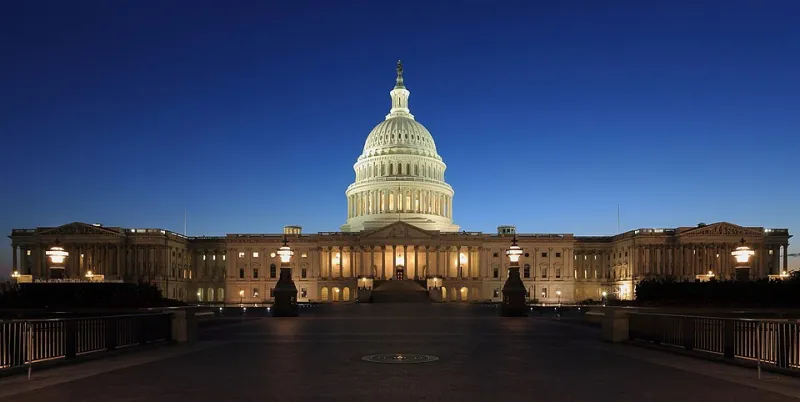
The Consent Gap: Treaty Power, Executive Agreements, and the 2026 Test
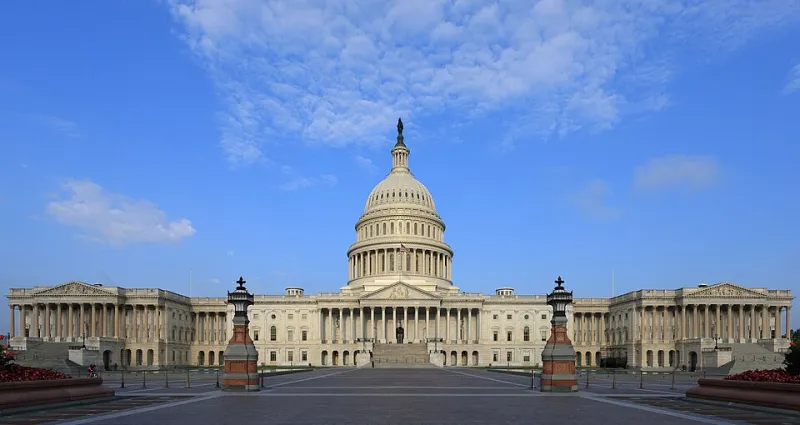
Photo: Martin Falbisoner, CC BY-SA 3.0, via Wikimedia Commons
The Constitution does not use the word 'treaty' often, but when it does, the text is exacting. Article II, Section 2 gives the president power to make treaties 'by and with the Advice and Consent of the Senate,' provided two-thirds of the senators present concur. That supermajority requirement is unusual. It forces the president to build a coalition broader than a simple majority and gives the Senate a role that is neither merely advisory nor purely veto. In 2026, as major policy commitments are increasingly pursued through executive agreements rather than formal treaties, the practical meaning of that clause is under fresh scrutiny.
What the Text Actually Says
The Treaty Clause is short, but its architecture is deliberate. The president may negotiate and propose; the Senate may advise and must consent; and the consent threshold is two-thirds. The Constitution does not create a general presidential power to bind the nation by agreement alone. Nor does it say that every international commitment must take the form of a treaty. That silence has produced a working system in which the United States enters into several kinds of international agreements.
The first is the Article II treaty, which requires Senate advice and consent by a two-thirds vote. The second is the congressional-executive agreement, which rests on prior or subsequent statutory authorization from both houses of Congress. The third is the sole executive agreement, which the president makes without new congressional approval, typically on matters said to fall within existing executive authority. These categories are not equally democratic. They are not equally durable either. A treaty approved by two-thirds of the Senate can be difficult to undo; a sole executive agreement can often be reversed by the next president.
The Founders' Senate
The Founding generation did not stumble into the supermajority requirement. The Constitutional Convention considered alternatives, including giving the Senate the power to make treaties outright and allowing treaties to be approved by a simple majority. The final compromise placed treaty-making in the executive but conditioned it on a broad Senate consent. The design reflected several concerns at once: that the states should have a voice in foreign commitments, that a president should not commit the nation lightly, and that stable agreements should not depend on narrow factions.
The Federalist Papers defended the arrangement as a check on both the executive and the legislature. The Senate would serve as a council of revision and restraint, while the two-thirds rule would prevent a slender majority from making lasting commitments. That history does not answer every modern question, but it does explain why the treaty clause remains more than a procedural relic. It encodes a judgment about legitimacy: commitments that bind the country should carry more than ordinary political support.
Three Commitments, Three Paths
The modern debate often blurs distinctions that matter. A congressional-executive agreement is not a treaty in constitutional form, but it can carry broad domestic effect because Congress has legislated. A sole executive agreement is weaker in democratic pedigree, but it may still be lawful when the president acts within independent constitutional authority. Courts have generally been reluctant to police the boundary. In cases such as United States v. Belmont and United States v. Pink, the Supreme Court gave effect to executive agreements in domestic litigation. In Goldwater v. Carter, the Justices declined to resolve a dispute over treaty termination, treating it as a political question among the branches.
That judicial restraint leaves the Constitution's separation of powers to be worked out politically. Congress can limit executive agreements by statute, condition funding, demand notice, or refuse to implement commitments that require legislation. The Senate can use its confirmation and oversight powers. But when the political branches prefer speed and flexibility, those checks may remain latent. The result is a system in which the formal Treaty Clause coexists with a much larger informal architecture of agreements.
Why 2026 Is a Stress Test
The current moment has made that architecture harder to ignore. Deep partisan polarization makes two-thirds Senate votes scarce. Administrations of both parties have therefore relied on agreements that do not require the treaty path. In 2026, debates over trade, technology, climate coordination, and security cooperation have renewed the question of whether major commitments are being made without the consent the Constitution envisioned.
The defenders of executive agreements make a practical case. Modern governance is fast, and many agreements are technical, reversible, or explicitly authorized by Congress. Requiring a two-thirds vote for every arrangement could paralyze diplomacy and weaken the president's ability to speak for the nation. The critics respond that the frequency of agreements has not been matched by a corresponding clarity about limits. If a commitment resembles a treaty in scope and permanence, they argue, it should face the treaty process or at least explicit congressional authorization.
Both positions can claim constitutional footing. The text does not forbid executive agreements, and historical practice has long accepted them. But the text does make Senate consent central to the treaty power. The interpretive question is whether that centrality can be preserved when the treaty form is treated as optional.
The Checks That Remain
The Constitution's answer is not a single courtroom test. It is a set of institutional pressures. Congress can legislate limits on executive agreements. It can require transmittal and review. It can refuse to fund commitments that depend on appropriations. The Senate can insist on its advice role before negotiations conclude, not only after. Voters can treat the choice between treaties and agreements as a question of constitutional seriousness.
None of these tools is self-executing. They require the political branches to treat the Treaty Clause as a rule of legitimacy rather than a hurdle to be avoided. In 2026, the question is not whether the president may ever sign an agreement without two-thirds of the Senate. The question is how far that practice can expand before the consent requirement loses its meaning.
The Treaty Clause remains a promise about how the nation makes lasting commitments. It does not guarantee that every commitment will take treaty form. It does guarantee that the Constitution's designers expected consent to be more than a formality. The 2026 debate is a test of whether that expectation still shapes practice.